Monday, 20 April 2026

Can You Lose Transplanted Hair?

A common concern after surgery is: can you lose transplanted hair?

It is completely normal to notice changes in your hair in the weeks and months following a hair transplant. In fact, many patients are surprised to see transplanted hairs fall out shortly after the procedure. This can feel worrying, but in most cases, it is an expected and temporary part of the process.

Understanding the difference between normal shedding and actual loss of transplanted hair is essential. While transplanted follicles are designed to be permanent, the visible hair you see after the procedure goes through a natural cycle before new growth begins.

Does Transplanted Hair Fall Out?

Yes, transplanted hair often falls out within 2 to 4 weeks after a hair transplant. This is a normal process called shedding or shock loss. The hair follicle remains in place and begins producing new hair within a few months.

In the weeks after a hair transplant, it is normal for the transplanted hairs to fall out. This phase is often referred to as “shedding” or “shock loss”.

Before hair transplant photos showing hairline markings and side profile, with text encouraging booking a free consultation

What Is Shock Loss After a Hair Transplant?

Shock loss refers to the temporary shedding of transplanted or surrounding hair after surgery.

This typically occurs between 2 and 4 weeks after the procedure.

Although it may look like the transplant has failed, this shedding is actually a standard part of the hair growth cycle. The hair shaft falls out, but the follicle remains in place beneath the skin.

Over time, the follicle begins producing new hair, which gradually grows and thickens.

At Capital Hair Restoration, we always explain to patients that early shedding is expected. It is part of the process, not a sign that the transplant has failed.
Darryl King – Capital Hair Restoration – Hair Consultant

Why Does Transplanted Hair Shed?

Hair grows in cycles, and a transplant temporarily disrupts this cycle.

When follicles are moved from one part of the scalp to another, they enter a resting phase. During this time, the existing hair sheds before new growth begins.

This process is similar to how natural hair behaves, but it is more noticeable after a transplant because many hairs are affected at the same time.

The key point is that the follicle itself remains intact. It is the visible hair that sheds, not the root responsible for future growth.

Can Transplanted Hair Be Lost Permanently?

In most cases, transplanted hair is not lost permanently.

The follicles used in a hair transplant are taken from areas that are resistant to DHT, the hormone responsible for male pattern baldness. Because of this, they are designed to continue growing hair long-term once they have successfully settled.

However, there are situations where grafts can be lost.

This is most likely to occur in the early stages of recovery, before the follicles have fully anchored in place. During this time, factors such as excessive touching, friction, or not following aftercare instructions can affect graft survival.

After the first 7 to 10 days, the grafts are usually secure, and the risk of losing them is significantly reduced.

Is It Normal to Worry About Hair Loss After a Transplant?

It is very common for patients to feel concerned when they see shedding after a hair transplant.

Because the change is visible, it can feel like the procedure has not worked. In reality, this stage is expected and temporary.

New growth typically begins within a few months, and the hair gradually becomes thicker and more consistent over time.

Understanding this timeline helps reduce unnecessary worry and allows you to focus on the longer-term result.

Hair Transplant Shedding & Regrowth Timeline

To fully understand whether you can lose transplanted hair, it helps to look at the typical timeline after a procedure.

hair transplant shedding & regrowth timeline

Weeks 1 to 2: Initial healing

In the first couple of weeks, the transplanted grafts are settling into the scalp. Small scabs form and gradually fall away as healing progresses.

At this stage, the hairs are still in place, and there is usually little visible change beyond redness or mild sensitivity.

Weeks 2 to 4: Shedding phase

This is when most patients notice transplanted hair falling out.

This shedding is completely normal and expected. The follicles enter a resting phase, and the visible hair shafts are released. Although it may appear as though the transplant is reversing, the follicles remain intact beneath the skin.

Months 3 to 4: Early regrowth

New hair begins to grow from the transplanted follicles.

At first, this hair may appear fine or uneven. This is part of the natural process, and thickness improves over time.

Months 6 to 9: Noticeable improvement

Hair becomes denser and more consistent across the treated areas.

At this stage, most patients begin to see a clear improvement in coverage and overall appearance.

12 months and beyond: Final result

The transplanted hair reaches maturity, with full thickness and natural growth patterns.

At this point, the results are typically long-lasting and blend seamlessly with existing hair.

A hair transplant is a gradual process. Shedding is an early phase, but regrowth is where the real results begin to show.
Steve Ambrose – Capital Hair Restoration – Hair Consultant

If you are thinking about getting a hair transplant, the best next step is to book a free consultation. This allows your hair to be assessed by an expert who can help you decide on the right step for your hair.


Hair Transplant Shedding FAQs

Does transplanted hair fall out?
Yes, it usually sheds within 2 to 4 weeks as part of the normal process.

Is it normal for transplanted hair to fall out?
Yes, this is expected and temporary.

Can transplanted hair fall out permanently?
In most cases no, as the follicles remain intact and continue growing.

What is shock loss after a hair transplant?
Shock loss is temporary shedding of transplanted or surrounding hair.

When does new hair grow after a transplant?
New growth usually starts around 3 to 4 months.

Before and after photos of a man’s hair transplant results with text encouraging booking a free consultation


via Capital Hair Restoration – Hair Transplant https://www.capitalhairrestoration.co.uk/can-you-lose-transplanted-hair/

Saturday, 18 April 2026

Does a Hair Transplant Look Natural? What to Expect From Modern FUE Results

Does a Hair Transplant Look Natural?

One of the most common concerns for anyone considering treatment is: does a hair transplant look natural?

If you are wondering whether hair transplant results look natural, the answer depends largely on the technique used and the experience of the clinic.

Modern hair transplant techniques are designed to produce results that are virtually indistinguishable from natural hair growth. When performed correctly, a hair transplant should not be noticeable as a procedure. Instead, it should simply look like your own hair has returned.

However, not all hair transplants achieve the same outcome. The difference between a natural and unnatural result often comes down to planning, technique, and attention to detail.

Understanding what makes a hair transplant look natural helps you know what to expect and what to look for when choosing a clinic.

Before and after photos showing hair transplant results for a male patient with hairline restoration and side profile, promoting free consultation at Capital Hair Restoration.

Do Hair Transplants Look Natural Today?

Yes, modern hair transplants can look completely natural when performed correctly. Using techniques such as FUE, individual hair follicles are placed at the correct angle, direction, and density to match natural hair growth.

Hair transplant techniques have advanced significantly over the past two decades.

Older methods often produced results that looked obvious or artificial. This was usually due to large grafts, poor placement, or unnatural hairline design. These results are still sometimes associated with hair transplants, but they do not reflect modern practice.

Today, FUE (Follicular Unit Extraction) allows surgeons to work with individual hair follicles. This level of precision makes it possible to recreate natural hair patterns, density, and direction.

When done properly, the result blends seamlessly with existing hair.

At Capital Hair Restoration, the goal is always to create a result that looks completely natural. It should not be obvious that a procedure has taken place.
Darryl King – Capital Hair Restoration – Hair Consultant

What Makes a Hair Transplant Look Natural?

A natural-looking hair transplant is not achieved through a single step. It is the result of multiple factors working together.

Hairline design

The hairline is one of the most important elements.

A natural hairline is not straight or overly defined. It is slightly irregular, with softer edges and variation in density. It is also designed to suit your age and face shape, rather than trying to recreate a much younger look.

Direction and angle of hair

Hair does not grow straight out of the scalp. It follows a natural direction and angle that varies across different areas.

Replicating this pattern is essential. If the angle is incorrect, the result can look unnatural even if the density is good.

Density and distribution

Natural hair is not evenly distributed. There are subtle variations in thickness and spacing.

A skilled surgeon will place grafts in a way that builds density gradually, rather than creating an artificial or overly uniform appearance.

Use of individual follicles

Modern FUE techniques allow for the placement of single-hair grafts at the front of the hairline and thicker grafts behind.

This creates a soft, natural transition that mimics real hair growth.

what makes a hair transplant look natural

Can You Tell If Someone Had a Hair Transplant?

One of the best indicators of a successful hair transplant is that you cannot tell it has been done.

In most cases, if a transplant is noticeable, it is due to poor technique rather than the procedure itself.

A well-executed transplant should:

  • Blend naturally with existing hair
  • Follow natural growth patterns
  • Suit the individual’s age and features

For most people, others will notice an improvement in appearance, but not the reason behind it.

Why Do Some Hair Transplants Look Unnatural?

While modern techniques allow for highly natural results, not every hair transplant achieves this outcome.

Unnatural results are usually the result of poor planning or execution, rather than the procedure itself.

An overly aggressive hairline

One of the most common issues is a hairline that is too low or too straight.

A natural hairline should reflect your age and how your hair is likely to change over time. Designing a hairline that is too youthful can look artificial, particularly as surrounding hair continues to thin.

Incorrect angle and direction

Hair grows in specific patterns across the scalp.

If transplanted hair is placed at the wrong angle or direction, it can stand out from the surrounding hair. This can make the result appear unnatural, even if the density is good.

Poor density planning

Trying to achieve too much density in a single procedure can lead to an unnatural appearance.

Natural hair density builds gradually. Over-packing grafts or placing them too uniformly can create a result that looks artificial rather than realistic.

Outdated techniques

Older methods, such as large graft placement, can produce visible clumping or an uneven look.

Modern FUE techniques avoid this by working with individual follicular units, allowing for much finer detail and control.

Inexperienced practitioners

Ultimately, many unnatural results come down to experience.

Hair transplantation requires both technical skill and an understanding of natural hair patterns. Without this, even a technically successful procedure can look out of place.

At Capital Hair Restoration, we focus on subtlety. The aim is always to create a result that blends in, rather than stands out.
Steve Ambrose – Capital Hair Restoration – Hair Consultant

How to Ensure Natural Hair Transplant Results

Achieving a natural result is not just about the procedure itself. It starts with the right approach from the beginning.

Choose an experienced clinic

Experience is one of the most important factors.

A reputable clinic will have a strong track record of natural results and will prioritise long-term planning over short-term changes.

Focus on planning, not just graft numbers

The number of grafts is important, but it is not the only factor.

Design, placement, and overall balance are what determine how natural the result looks.

Take a long-term view

Hair loss is progressive.

A good transplant plan considers how your hair will change in the future and ensures the result remains balanced over time.

Follow aftercare guidance

Proper aftercare supports healing and helps ensure the transplanted follicles grow as expected.

Do FUE Hair Transplants Look Natural?

FUE is currently the most widely used technique because of the level of precision it offers.

By extracting and placing individual follicles, FUE allows for:

  • Natural hairline design
  • Accurate control of direction and angle
  • Minimal scarring

When performed correctly, FUE produces results that are difficult to distinguish from natural hair growth.

Final Thoughts: Does a Hair Transplant Look Natural?

A hair transplant can look completely natural when it is planned and performed correctly.

The key factors are not just the procedure itself, but the approach behind it. Hairline design, graft placement, and long-term planning all play a role in achieving a result that blends seamlessly with your existing hair.

Unnatural results are usually the result of poor technique or unrealistic planning, rather than a limitation of the procedure.

With modern FUE techniques and an experienced clinical team, a hair transplant should not be noticeable as a treatment. It should simply look like your hair.

If you are considering a hair transplant and want to understand what kind of result is achievable in your case, the best next step is to book a free consultation. This allows you to explore your options, see examples of natural results, and create a plan that is tailored to you.

Hair Transplant Natural Results FAQs

Do hair transplants look natural?
Yes, modern FUE hair transplants can look completely natural when performed correctly.

Can you tell if someone had a hair transplant?
In most cases, no. A well-executed transplant blends seamlessly with natural hair.

Do hair transplants look fake?
They can if poorly performed, but modern techniques are designed to avoid this.

Does FUE look natural?
Yes, FUE allows precise placement of individual follicles, creating natural results.

What makes a hair transplant look natural?
Hairline design, angle, direction, and density all play a role.

Before and after hair transplant photos with text "Concerned about hair loss? Book a free consultation today" and Capital Hair Restoration logo.


via Capital Hair Restoration – Hair Transplant https://www.capitalhairrestoration.co.uk/does-a-hair-transplant-look-natural-what-to-expect-from-modern-fue-results/

Friday, 10 April 2026

Can a Hair Transplant Fail?

Can a Hair Transplant Fail? Causes, Risks and What to Expect

One of the most common concerns patients have before and after treatment is: can a hair transplant fail?

Hair transplant surgery is widely considered a reliable and long-term solution for hair loss. Modern techniques, particularly FUE (Follicular Unit Extraction), have significantly improved both success rates and the natural appearance of results.

In most cases, a hair transplant is successful. The majority of transplanted grafts survive, grow, and produce long-lasting results. However, like any medical procedure, there are situations where outcomes may not meet expectations.

This does not always mean the transplant has completely failed. In many cases, what patients perceive as failure is part of the normal recovery process or the result of unrealistic expectations.

Understanding the difference between normal post-transplant changes and actual hair transplant failure is essential. It helps you know what to expect, how to assess your results, and how to avoid potential issues.

Hair transplants are highly reliable when performed correctly, but like any procedure, the outcome depends on the planning, technique, and aftercare.

Darryl King – Capital Hair Restoration – Hair Consultant

Do Hair Transplants Fail?

Hair transplants can fail, but this is relatively uncommon when the procedure is performed correctly.

A “failed hair transplant” can mean different things depending on the situation. It may refer to:

  • Poor graft survival, where transplanted follicles do not grow
  • Unnatural results due to poor design or placement
  • Low density that does not meet expectations
  • Continued hair loss around transplanted areas

In many cases, patients worry about failure during the early stages of recovery. For example, shedding in the first few weeks is completely normal and not a sign that the transplant has failed.

True hair transplant failure is usually linked to issues such as technique, planning, or aftercare, rather than the concept of the procedure itself.

When performed by an experienced clinic, hair transplant success rates are high, and the risk of failure is low.

Many patients worry about failure in the early stages, but shedding and slow growth are completely normal parts of the process, not signs that the transplant has failed.

Steven Ambrose – Capital Hair Restoration – Hair Consultant

What Is the Success Rate of a Hair Transplant?

Hair transplant success rates are generally very high, particularly with modern FUE techniques.

Most transplanted grafts successfully establish themselves in the scalp and begin growing new hair within a few months. Over time, this hair thickens and blends naturally with existing hair.

Success depends on several key factors:

  • The skill and experience of the surgical team
  • The quality of the donor hair
  • How grafts are handled during the procedure
  • Following proper aftercare instructions

When these elements are in place, results are predictable and long-lasting.

It is important to understand that success does not mean immediate results. Hair growth after a transplant is gradual. The full outcome is usually visible after 9 to 12 months.

What Causes a Hair Transplant to Fail?

While failure is uncommon, there are specific factors that can affect the outcome of a hair transplant.

Poor surgical technique

The way grafts are extracted, handled, and implanted has a direct impact on survival rates. Damage to follicles during the procedure can reduce growth.

Inexperienced practitioners

Hair transplantation requires both technical skill and aesthetic judgement. Inexperience can lead to poor placement, unnatural hairlines, or low graft survival.

Weak donor area

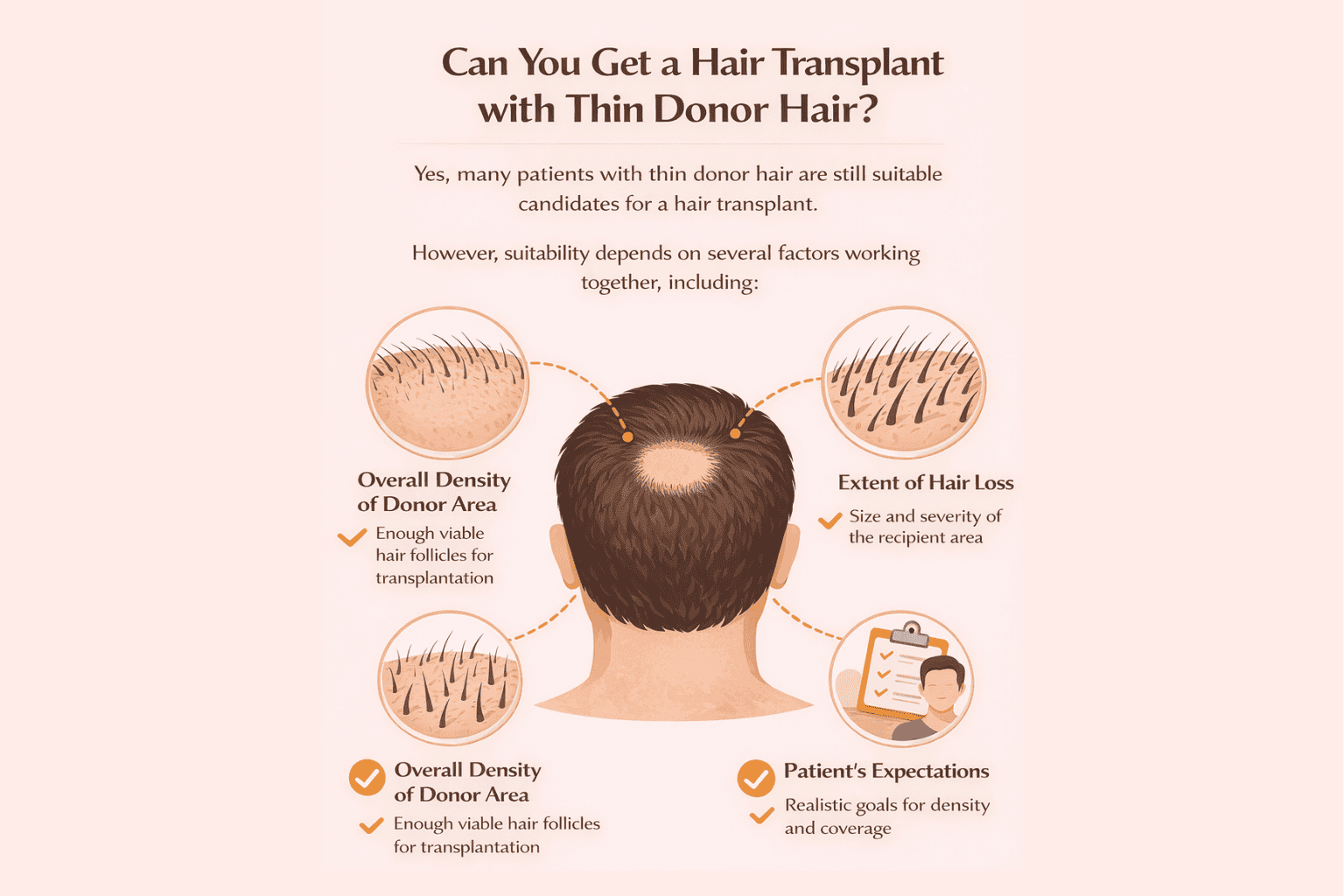
If the donor hair is thin or limited, it may not provide enough healthy follicles to achieve the desired result.

Poor aftercare

The first few days after surgery are critical. Excessive touching, sweating, or not following instructions can affect graft survival.

Unrealistic expectations

Sometimes the issue is not failure, but expectations that do not match what is achievable. A hair transplant improves density but does not recreate full original thickness.

Understanding these factors helps reduce risk and ensures better outcomes.

When issues do occur, they are usually linked to poor technique, weak donor hair, or inadequate aftercare rather than the transplant itself.

Darryl King – Capital Hair Restoration – Hair Consultant

One of the most common concerns patients have before and after treatment is: can a hair transplant fail?

Hair transplant surgery is widely considered a reliable and long-term solution for hair loss. Modern techniques, particularly FUE (Follicular Unit Extraction), have significantly improved both success rates and the natural appearance of results.

In most cases, a hair transplant is successful. The majority of transplanted grafts survive, grow, and produce long-lasting results. However, like any medical procedure, there are situations where outcomes may not meet expectations.

This does not always mean the transplant has completely failed. In many cases, what patients perceive as failure is part of the normal recovery process or the result of unrealistic expectations.

Understanding the difference between normal post-transplant changes and actual hair transplant failure is essential. It helps you know what to expect, how to assess your results, and how to avoid potential issues.

Do Hair Transplants Fail?

Hair transplants can fail, but this is relatively uncommon when the procedure is performed correctly.

A “failed hair transplant” can mean different things depending on the situation. It may refer to:

  • Poor graft survival, where transplanted follicles do not grow
  • Unnatural results due to poor design or placement
  • Low density that does not meet expectations
  • Continued hair loss around transplanted areas

In many cases, patients worry about failure during the early stages of recovery. For example, shedding in the first few weeks is completely normal and not a sign that the transplant has failed.

True hair transplant failure is usually linked to issues such as technique, planning, or aftercare, rather than the concept of the procedure itself.

When performed by an experienced clinic, hair transplant success rates are high, and the risk of failure is low.

What Is the Success Rate of a Hair Transplant?

Hair transplant success rates are generally very high, particularly with modern FUE techniques.

Most transplanted grafts successfully establish themselves in the scalp and begin growing new hair within a few months. Over time, this hair thickens and blends naturally with existing hair.

Success depends on several key factors:

  • The skill and experience of the surgical team
  • The quality of the donor hair
  • How grafts are handled during the procedure
  • Following proper aftercare instructions

When these elements are in place, results are predictable and long-lasting.

It is important to understand that success does not mean immediate results. Hair growth after a transplant is gradual. The full outcome is usually visible after 9 to 12 months.

What Causes a Hair Transplant to Fail?

While failure is uncommon, there are specific factors that can affect the outcome of a hair transplant.

Poor surgical technique

The way grafts are extracted, handled, and implanted has a direct impact on survival rates. Damage to follicles during the procedure can reduce growth.

Inexperienced practitioners

Hair transplantation requires both technical skill and aesthetic judgement. Inexperience can lead to poor placement, unnatural hairlines, or low graft survival.

Weak donor area

If the donor hair is thin or limited, it may not provide enough healthy follicles to achieve the desired result.

Poor aftercare

The first few days after surgery are critical. Excessive touching, sweating, or not following instructions can affect graft survival.

Unrealistic expectations

Sometimes the issue is not failure, but expectations that do not match what is achievable. A hair transplant improves density but does not recreate full original thickness.

Understanding these factors helps reduce risk and ensures better outcomes.

A successful result is not just about growth. It is about achieving a natural look that holds up over time, which starts with realistic expectations and careful planning.

Steven Ambrose – Capital Hair Restoration – Hair Consultant

Hair Transplant Failure FAQs

Can a hair transplant fail completely?
Complete failure is very rare. In most cases, some level of growth occurs. When issues arise, they are usually partial and can often be improved.

How often do hair transplants fail?
Hair transplant failure is uncommon when performed by an experienced clinic. Success rates are generally high with modern FUE techniques.

What happens if a hair transplant does not work?
If results are below expectations, a second procedure or corrective treatment can often improve density, shape, or overall appearance.

Why did my hair transplant not work?
Common reasons include poor graft handling, weak donor hair, inadequate aftercare, or unrealistic expectations about density.

Can you fix a failed hair transplant?
Yes, in many cases. Corrective procedures can refine the hairline, improve density, and create a more natural result.

Final Thoughts: Can a Hair Transplant Fail?

A hair transplant can fail, but this is relatively uncommon when the procedure is performed correctly.

Most patients achieve successful, natural-looking results that continue to grow over time. When problems do occur, they are often linked to factors such as poor planning, technique, or aftercare, rather than the procedure itself.

It is also important to recognise that not all concerns are signs of failure. Shedding in the early stages, gradual growth, and differences in density are all normal parts of the process.

The key to avoiding hair transplant failure lies in choosing the right clinic, having realistic expectations, and taking a long-term approach.

When these elements are in place, a hair transplant can provide a reliable and lasting solution to hair loss.

Your Next Step

If you are concerned about hair transplant results or want to understand how to achieve the best possible outcome, the best place to start is with a free consultation.

At Capital Hair Restoration, we will:

  • Assess your hair loss and donor area
  • Explain what results are realistically achievable
  • Identify any risks or limitations
  • Create a personalised, long-term treatment plan

This is your opportunity to get clear, honest advice and understand exactly what to expect.

Book your free consultation today and take the first step towards a natural, successful result that is built to last.


via Capital Hair Restoration – Hair Transplant https://www.capitalhairrestoration.co.uk/can-a-hair-transplant-fail/

Wednesday, 8 April 2026

How Does a Hair Transplant Work? Step-by-Step FUE Procedure Explained

How Does a Hair Transplant Work?

A common question for anyone considering treatment is simple: how does a hair transplant work?

If you are researching the FUE hair transplant procedure or want to understand how a hair transplant works step by step, it helps to know exactly what happens from consultation through to recovery and regrowth.

Hair transplant surgery is a highly precise medical procedure designed to restore natural hair growth using your own follicles. The most widely used technique today is FUE (Follicular Unit Extraction), known for producing natural-looking results with minimal scarring and a relatively quick recovery time.

At its core, an FUE hair transplant works by taking healthy, DHT-resistant hair follicles from the back and sides of the scalp and redistributing them into areas affected by thinning or baldness. Because these follicles are genetically resistant to hair loss, they continue to grow in their new location over the long term.

While the concept is straightforward, the process itself is detailed and carefully structured. Each stage plays an important role in ensuring the final result looks natural, balanced, and appropriate for the patient both now and in the future.

Understanding the hair transplant procedure step by step helps set realistic expectations and gives clarity on what happens during the day of surgery and beyond.

What Is a FUE Hair Transplant and How Does It Work?

An informative infographic from Capital Hair Restoration explaining the typical Follicular Unit Extraction (FUE) hair transplant process. The guide breaks down the four key steps: hair trimming of the donor area for precise extraction, follicle extraction using a micro-punch tool, site preparation with tiny incisions carefully mapped for natural growth, and graft placement where extracted follicles are delicately implanted to recreate a natural hairline and coverage.

FUE stands for Follicular Unit Extraction. It is a technique where individual hair follicles are removed one by one from the donor area and transplanted into areas where hair has been lost.

Each follicular unit typically contains between one and four hairs. These are extracted using a specialised micro-punch tool, which allows the surgeon to remove follicles with precision while minimising trauma to the surrounding scalp.

Unlike older methods such as FUT (strip surgery), FUE does not involve removing a strip of skin. This means there is no linear scar, and healing tends to be faster and less noticeable. Patients can usually return to normal daily activities within a few days, although full recovery and hair growth take longer.

The key advantage of FUE is control. Because each follicle is handled individually, the surgeon can carefully place grafts to match the natural direction, angle, and density of existing hair. This is what allows modern hair transplants to look so natural.

However, it is important to understand that FUE does not stop hair loss. It redistributes hair. The long-term success of the procedure depends on proper planning, ensuring that transplanted areas remain balanced as surrounding hair changes over time.

At Capital Hair Restoration, we approach every transplant as a long-term plan. The goal is not just to restore hair today, but to ensure it continues to look natural in the years ahead.
Darryl King, Capital Hair Restoration – Hair Consultant

Hair Transplant Procedure Step by Step

For patients asking what happens during a hair transplant, the procedure can be broken down into several key stages:

  • Consultation and planning
  • Donor area preparation
  • Extraction of hair follicles
  • Creation of recipient sites
  • Implantation of grafts
  • Recovery and regrowth

Each of these steps contributes to the final outcome. While the procedure itself is completed in a single day in most cases, the full results develop gradually over several months.

The following sections break down each step in detail, explaining exactly how an FUE hair transplant works from start to finish.

Before and after hair transplant photos with text "Concerned about hair loss? Book a free consultation today" and Capital Hair Restoration logo.

Step 1: Consultation and Hairline Design

The first and most important stage in understanding how a hair transplant works is the consultation. This is where the entire procedure is planned, and it has a direct impact on how natural the final result will look.

During a consultation, a specialist will assess several key factors. These include your pattern of hair loss, the density and quality of your donor area, your age, and how your hair loss is likely to progress in the future. Hair loss is not static, so planning must take into account how your hair may change over time, not just how it looks today.

A major part of this stage is designing the hairline. This is not simply about restoring a youthful appearance. Instead, the aim is to create a natural, age-appropriate hairline that will continue to look balanced as you get older. A hairline that is too low or too aggressive can look unnatural over time, especially if further hair loss occurs behind it.

The consultation is also where graft numbers are estimated. This determines how many follicles will need to be extracted and transplanted to achieve the desired level of coverage and density. The available donor supply plays a key role here, as it must be managed carefully to ensure long-term sustainability.

At Capital Hair Restoration, the consultation is where the real work begins. Every decision made at this stage shapes how natural and long-lasting the final result will be.
Steve Ambrose Capital Hair Restoration – Hair Consultant

Step 2: Preparing the Donor Area

On the day of the procedure, the first clinical step is preparing the donor area. This is typically located at the back and sides of the scalp, where hair follicles are genetically resistant to DHT and therefore less likely to thin over time.

Preparation usually involves trimming or shaving the donor area to allow clear access to individual follicles. The scalp is then cleaned thoroughly to maintain a sterile environment.

Local anaesthetic is administered to ensure the procedure is comfortable. This is one of the few moments where patients may feel slight discomfort, usually described as a brief stinging sensation. Once the anaesthetic has taken effect, the area becomes numb and the rest of the procedure is generally pain-free.

The careful preparation of the donor area is essential. It ensures that follicles can be extracted efficiently while minimising trauma to the scalp and preserving the quality of the grafts.


group before after hair transplant milton keynes 01

Step 3: Extracting Hair Follicles (FUE Extraction)

This stage is where the FUE hair transplant process begins in full.

Using a specialised micro-punch tool, the surgeon extracts individual follicular units from the donor area. Each unit is removed one by one, requiring a high level of precision and consistency.

The goal during extraction is to preserve the integrity of each follicle. If a follicle is damaged during removal, it may not survive when transplanted. For this reason, the process is performed carefully and methodically, often over several hours depending on the number of grafts required.

Once extracted, the follicles are placed into a controlled solution. This helps maintain their viability before implantation. Temperature, hydration, and handling are all carefully managed during this stage to ensure the highest possible survival rate.

The number of grafts extracted varies depending on the individual treatment plan. Smaller procedures may involve around 1,000 grafts, while larger sessions can involve 3,500 or more.

This stage also requires careful spacing within the donor area. Over-harvesting can lead to visible thinning at the back of the scalp, so follicles are taken evenly to maintain a natural appearance.

The extraction phase is as much about preservation as it is removal. Every graft needs to be handled with care to ensure it grows successfully once implanted.
Steve Ambrose – Capital Hair Restoration – Hair Consultant

Step 4: Creating the Recipient Area

Once the follicles have been extracted, attention turns to the recipient area, where the hair will be restored.

This stage involves creating tiny, precise incisions in the scalp. These incisions determine how the transplanted hair will grow, making this one of the most technically important parts of the entire procedure.

Each incision is carefully placed to control three key factors:

  • The direction of hair growth
  • The angle at which the hair emerges from the scalp
  • The overall density and distribution of the grafts

Hair does not grow straight out of the scalp. It follows a natural pattern that varies depending on the area, particularly around the hairline and temples. Replicating this pattern is essential for achieving a result that looks natural rather than artificial.

The hairline itself requires especially careful work. Single-hair grafts are typically placed at the very front to create a soft, natural transition, while thicker grafts are positioned further back to build density.

This stage is where surgical precision meets aesthetic judgement. Even small variations in angle or placement can affect how the final result looks.

The placement stage is where the artistry comes in. It is not just about adding hair, but about recreating a natural pattern that blends seamlessly with what is already there.
Darryl King – Capital Hair Restoration – Hair Consultant

Step 5: Implanting the Hair Follicles

After the recipient sites have been created, the extracted follicles are implanted into the scalp.

Each graft is placed individually into the pre-made incisions. This is a meticulous and time-intensive process, but it is essential for achieving a consistent and natural result.

During implantation, the surgical team ensures that:

  • Each follicle is placed at the correct depth
  • The direction and angle match the surrounding hair
  • Density is distributed evenly across the treatment area

The number of grafts being implanted will influence how long this stage takes. Smaller procedures may be completed within a few hours, while larger sessions can take most of the day.

Because each graft is handled individually, care and consistency are critical throughout. Proper handling helps maximise graft survival and ensures that the transplanted follicles begin growing successfully in their new location.

Once implanted, the follicles are securely positioned within the scalp. Over the following days, they begin to establish a blood supply, which is essential for long-term growth.

group before after hair transplant southampton 02

Step 6: Immediate Aftercare and Recovery

After the procedure is complete, the focus shifts to recovery.

Patients are given detailed aftercare instructions to protect the newly transplanted grafts and support healing. The first few days are particularly important, as the grafts are still settling into place.

It is normal to experience:

  • Mild redness in both donor and recipient areas
  • Small scabs forming around each graft
  • Slight swelling, particularly around the forehead

These effects are temporary and typically improve within a few days.

Most patients can return to normal daily activities relatively quickly, although strenuous exercise, heavy sweating, and direct contact with the scalp should be avoided for a short period.

The transplanted grafts become more secure over the first 7 to 10 days. During this time, following aftercare guidance closely helps ensure optimal results.

At Capital Hair Restoration, aftercare is just as important as the procedure itself. Protecting the grafts in the early stages plays a key role in the final outcome.
Steve Ambrose –  Capital Hair Restoration – Hair Consultant

What Happens After a Hair Transplant?

Although the procedure is completed in a single day, the results develop gradually over time.

In the first few weeks, the transplanted hairs often shed. This is a normal part of the process and does not mean the procedure has failed. The follicles remain in place beneath the skin.

New growth typically begins around three to four months after the procedure. At this stage, the hair may appear fine at first but gradually becomes thicker and more consistent.

By six to nine months, noticeable improvement is visible, with increased density across the treated areas.

Final results are usually seen after around 12 months, when the transplanted hair has fully matured and blended with the existing hair.

A hair transplant is a gradual transformation. The results build over time, but when complete, they look completely natural.
Darryl King – Capital Hair Restoration – Hair Consultant

If you are considering a hair transplant and want clear, personalised advice, the best next step is to book a free consultation. This gives you the opportunity to understand your hair loss, assess your donor area, and explore what results are realistically achievable. 

At Capital Hair Restoration, we take a long-term approach, ensuring any treatment is carefully planned to look natural both now and in the future. With expert guidance, you can make a confident, informed decision about your hair restoration journey.

Hair Transplant Procedure FAQs

How does an FUE hair transplant work?
An FUE hair transplant works by extracting individual follicles from the donor area and implanting them into thinning or bald areas.

How long does a hair transplant procedure take?
Most procedures take several hours and are usually completed in one day.

Does a hair transplant hurt?
The procedure is performed under local anaesthetic, so pain is usually minimal.

How long does it take to recover from a hair transplant?
Initial healing usually takes 7 to 10 days, while full growth develops over several months.

When will I see results after a hair transplant?
New growth usually starts around 3 to 4 months, with final results around 12 months.

Before and after photos showing hair transplant results for a male patient with hairline restoration and side profile, promoting free consultation at Capital Hair Restoration.


via Capital Hair Restoration – Hair Transplant https://www.capitalhairrestoration.co.uk/how-does-a-hair-transplant-work-step-by-step-fue-procedure-explained/

Saturday, 4 April 2026

How Long Do Hair Transplants Last? Are They Permanent and What to Expect Long Term

How Long Do Hair Transplants Last?

One of the most common and important questions patients ask is: how long do hair transplants last?

If you are researching how long hair transplants last or whether they are truly permanent, understanding how transplanted hair behaves over time is essential.

Hair transplants are considered permanent. The transplanted hair follicles are resistant to hair loss and typically continue to grow for life. However, surrounding natural hair may continue to thin over time, which can affect overall appearance.

Hair transplant surgery is widely considered a permanent solution to hair loss. In most cases, this is true. The transplanted hair follicles are taken from areas of the scalp that are genetically resistant to hair loss, meaning they are designed to continue growing for many years, often for life.

However, the full answer is more nuanced. While transplanted hair itself is typically permanent, the overall appearance of your hair over time depends on several factors. These include how your natural hair continues to change, the quality of the procedure, and whether your hair loss is properly managed after surgery.

For many men, the goal is not simply to restore hair in the short term, but to achieve a result that continues to look natural, balanced, and appropriate as they age.

Before and after hair transplant photos with text "Concerned about hair loss? Book a free consultation today" and Capital Hair Restoration logo.

Are Hair Transplants Permanent?

A key part of understanding how long a hair transplant lasts is understanding why it works in the first place.

During an FUE hair transplant, follicles are taken from the donor area, usually at the back and sides of the scalp. These areas are resistant to DHT, the hormone responsible for male pattern baldness.

Because of this, the transplanted follicles retain their resistance even after they are moved. This principle is known as donor dominance. It means the hair continues to grow in its new location in the same way it would have in the donor area.

In this sense, a hair transplant is permanent. The follicles that are successfully transplanted will continue to grow hair long-term.

However, this does not mean that your entire head of hair is protected. A hair transplant does not stop the underlying cause of hair loss. Any existing, non-transplanted hair can still thin over time.

This is where long-term planning becomes important. A well-executed transplant is designed not only for the current stage of hair loss, but for how your hair may change in the future.

At Capital Hair Restoration, we explain that the transplanted hair is permanent, but the overall result depends on how the rest of your hair evolves over time.
Darryl King, Capital Hair Restoration – Hair Consultant

How Long Does Transplanted Hair Last?

Once transplanted follicles have settled and begun growing, they are typically long-lasting.

After the procedure, the hair goes through a natural cycle. In the first few weeks, the transplanted hairs often shed. This is expected and does not affect the follicles themselves. New growth usually begins around three to four months after the procedure.

Over the following months, the hair becomes thicker and more consistent. By around 12 months, the final result is usually visible.

From this point onwards, the transplanted hair behaves like natural hair. It continues to grow, can be cut and styled, and in most cases lasts indefinitely.

This is why many patients view a hair transplant as a one-time solution. However, this depends on how well the surrounding hair is maintained and how the procedure was originally planned.

Do Hair Transplants Last Forever?

This is another common variation of the same question.

In terms of the transplanted follicles themselves, the answer is yes. In most cases, they will continue to grow for life.

However, the overall appearance of your hair may change over time. If surrounding hair continues to thin, it can affect how full or balanced the result looks years later.

For this reason, a hair transplant should always be viewed as part of a long-term strategy, not a standalone procedure.

Side-by-side images showing a man before hair transplant surgery with hairline markings and 10 days after with shaved head and new grafts

What Affects How Long a Hair Transplant Lasts?

While transplanted hair is typically permanent, the overall longevity and appearance of a hair transplant depend on several important factors. Understanding these helps set realistic expectations and ensures better long-term results.

The stability of your hair loss

One of the biggest factors is whether your hair loss has stabilised before surgery.

If a transplant is performed too early, when hair loss is still progressing rapidly, surrounding native hair may continue to thin after the procedure. This can create uneven density over time, where transplanted areas remain full but neighbouring areas become thinner.

This is why many clinics recommend stabilising hair loss first, often with treatments such as Finasteride, before proceeding with surgery.

The quality of the donor area

The strength and density of your donor hair play a key role in how well a transplant holds up over time.

Healthy donor follicles are more likely to survive the procedure and continue growing long-term. If the donor area is weak or over-harvested, it can affect both the immediate result and how natural the hair looks in the future.

A well-managed donor area ensures that hair can be used efficiently, not just for one procedure, but potentially for future treatments if needed.

Surgical technique and planning

How the transplant is performed has a direct impact on how long it lasts.

This includes:

  • The precision of extraction and implantation
  • The survival rate of the grafts
    The design of the hairline and overall density

Poor technique can damage follicles or lead to unnatural placement, affecting both growth and long-term appearance. In contrast, a well-planned procedure is designed to age naturally with the patient.

A successful transplant is not just about the day of surgery. It is about planning for how the result will look five, ten, or even twenty years later.
Steve Ambrose, Capital Hair Restoration – Hair Consultant

Will You Need Another Hair Transplant?

Another common question linked to how long hair transplants last is whether a second procedure will be needed in the future.

The answer depends on how your hair loss progresses.

The transplanted follicles themselves will usually continue to grow. However, if hair loss continues in untreated areas, you may notice thinning around the transplanted zones over time.

In these cases, some patients choose to have a second procedure to maintain overall density and balance.

This does not mean the first transplant has failed. It simply reflects the ongoing nature of hair loss. A second procedure is often part of a long-term plan rather than a correction.

Not all patients require additional treatment. Those with stabilised hair loss and good donor management may achieve a result that remains consistent for many years without further surgery.

Before and after photos of a man’s hair transplant showing hairline markings and fuller hair, with text encouraging booking a free consultation

How to Make a Hair Transplant Last Longer

While transplanted hair is naturally long-lasting, there are steps you can take to maintain the overall result.

Managing ongoing hair loss

Treatments such as Minoxidil or Finasteride can help slow or stabilise further hair loss. This protects the surrounding hair and helps maintain a fuller appearance over time.

Following aftercare properly

The first few weeks after surgery are critical for graft survival. Following aftercare instructions closely helps ensure the transplanted follicles settle successfully.

Maintaining general scalp and hair health

Good overall health, including nutrition and scalp care, supports long-term hair quality and growth.

Planning conservatively

A natural, age-appropriate hairline and balanced density are more likely to stand the test of time than aggressive designs that may not age well.

Why Long-Term Planning Matters

A hair transplant should always be approached as part of a long-term strategy.

Rather than focusing only on immediate results, experienced clinics plan for how your hair will change over time. This includes preserving donor hair, designing a realistic hairline, and considering the possibility of future hair loss.

When a transplant is planned properly, it should continue to look natural not just in the first year, but for many years afterwards.
Darryl King – Capital Hair Restoration – Hair Consultant

Final Thoughts: How Long Do Hair Transplants Last?

how long does a hair transplant last

how long does a hair transplant last

Hair transplants are designed to be a long-term solution to hair loss. In most cases, the transplanted follicles will continue to grow for life, providing a permanent foundation for restored hair.

However, the overall result is not just about the transplanted hair itself. It depends on how your natural hair changes over time, how well the procedure is planned, and how effectively ongoing hair loss is managed.

A successful hair transplant is one that continues to look natural years down the line. This requires careful planning, a strong donor area, and a realistic approach to both design and long-term maintenance.

For some patients, one procedure is enough to achieve a lasting result. For others, additional treatment may be considered in the future to maintain balance as hair loss progresses. This is not a failure of the transplant, but a reflection of the ongoing nature of hair loss.

Ultimately, the key to long-lasting results is not just the procedure itself, but the strategy behind it.

If you are considering a hair transplant and want to understand what kind of long-term result you can expect, the best next step is a professional consultation. With the right guidance, you can make a confident, informed decision and achieve a result that looks natural, stable, and built to last.

Hair Transplant Longevity FAQs

Are hair transplants permanent?
Yes, transplanted hair follicles are typically permanent and continue to grow for life.

Do hair transplants last forever?
The transplanted hair usually does, but surrounding natural hair may continue to thin.

Can a hair transplant fall out years later?
The transplanted follicles are stable, but changes in surrounding hair can affect overall appearance.

Will I need another hair transplant?
Some patients choose a second procedure if hair loss progresses.

Does a hair transplant stop hair loss?
No, additional treatments may be needed to maintain existing hair.

Before and after photos showing hair transplant results for a male patient with hairline restoration and side profile, promoting free consultation at Capital Hair Restoration.


via Capital Hair Restoration – Hair Transplant https://www.capitalhairrestoration.co.uk/how-long-do-hair-transplants-last-are-they-permanent-and-what-to-expect-long-term/

Wednesday, 1 April 2026

What Affects Hair Transplant Cost? UK Pricing, Grafts and What You Pay For

What Affects Hair Transplant Cost?

One of the most common questions patients ask when considering treatment is: what affects hair transplant cost?

If you are researching hair transplant cost in the UK or wondering what determines the price, it is important to understand that no two procedures are the same.

Hair transplant pricing can vary significantly between individuals and clinics. In the UK, procedures can range from a few thousand pounds to over £10,000, depending on several factors. Understanding what determines the cost helps you make a more informed decision and avoid focusing on price alone.

A hair transplant is not a standard, fixed-price procedure. It is a tailored medical treatment, and the cost reflects the level of planning, expertise, and resources required to achieve a natural and long-lasting result.

Rather than asking how much a hair transplant costs in general, it is more useful to understand what goes into the pricing and why it can differ from one patient to another.

How Much Does a Hair Transplant Cost in the UK?

Hair transplant cost in the UK typically ranges from £3,000 to £10,000, depending on the number of grafts required, the complexity of the procedure, and the clinic. Smaller procedures cost less, while larger or more complex cases require more time and resources.

Before breaking down the factors, it is helpful to understand typical pricing ranges.

In the UK, an FUE hair transplant usually costs between £3,000 and £10,000 or more. The exact price depends on the number of grafts required, the complexity of the procedure, and the clinic you choose.

Smaller procedures, such as refining a hairline, are usually at the lower end of the range. Larger procedures involving both the hairline and crown, or requiring a high number of grafts, will be more expensive.

how much does a hair transplant cost in the uk?

While this range gives a general guide, it does not explain why prices vary. Two patients can receive very different quotes based on their individual hair loss and treatment plan.

Why Hair Transplant Prices Vary

Hair transplant costs vary because no two procedures are the same.

Each treatment is customised based on factors such as:

  • The extent of hair loss
  • The number of grafts required
  • The quality of the donor area
  • The complexity of the hairline design

A patient with early-stage hair loss may only need a smaller number of grafts, resulting in a lower cost. In contrast, someone with more advanced hair loss may require a larger session, increasing both time and resources.

The experience and reputation of the clinic also play a role. Established clinics with experienced surgeons, strong results, and comprehensive aftercare may charge more, reflecting the level of expertise involved.

At Capital Hair Restoration, pricing is based on what is required to achieve a natural and long-lasting result. Every treatment is planned individually rather than priced as a one-size-fits-all procedure.
Darryl King, Capital Hair Restoration – Hair Consultant

Hair Transplant Cost Breakdown

what affects hair transplant cost

To understand what affects hair transplant cost, it helps to break down what you are actually paying for.

A hair transplant is not just the procedure itself. The cost typically includes:

  • Consultation and treatment planning
  • Surgical time and expertise
  • The clinical team performing the procedure
  • Equipment and facilities
  • Aftercare and follow-up appointments

The procedure itself can take several hours and involves a team of trained professionals working with precision at every stage. This level of detail and care contributes to the overall cost.

It is also important to consider long-term value. A well-performed hair transplant is designed to last for many years, often for life. This makes it different from temporary treatments that require ongoing spending.

Before and after hair transplant photos with text "Concerned about hair loss? Book a free consultation today" and Capital Hair Restoration logo.

What Determines Hair Transplant Cost?

While overall pricing varies, there are specific factors that have the greatest impact on cost. Understanding these in detail helps explain why quotes can differ and what you should expect from a consultation.

Key Factors That Affect Hair Transplant Cost

When patients ask what affects hair transplant cost, there are several core factors that determine the final price. These go beyond simple pricing and reflect the level of work required to achieve a natural, long-lasting result.

Number of grafts required

The most significant factor in hair transplant pricing is the number of grafts needed.

Each graft contains one to four hairs and is extracted and implanted individually. The more grafts required, the longer the procedure takes and the more resources are involved.

For example:

  • 1,000 to 1,500 grafts may be suitable for minor hairline work
  • 2,000 to 3,000 grafts are often required for more advanced hairline or crown restoration
  • Larger cases may require even more

Because each graft must be handled with precision, the cost increases with the size of the procedure.

Complexity of the procedure

Not all hair transplants are equally straightforward.

Some cases require more detailed planning and technical skill, particularly when:

  • Designing a natural hairline
  • Working around existing hair
  • Restoring both the hairline and crown
  • Correcting a previous transplant

More complex procedures take longer and require a higher level of expertise, which can influence cost.

Experience of the surgeon and clinic

The experience and reputation of the clinic play a major role in pricing.

Highly experienced surgeons and established clinics often charge more, reflecting:

  • Proven results
  • Consistent graft survival rates
  • Advanced techniques and planning
  • A skilled clinical team

Lower-cost options may involve less experienced practitioners or higher patient volumes, which can affect the level of care and attention given to each procedure.

Choosing a clinic based on price alone can increase the risk of poor results, which may require corrective work later.

Technique used (FUE vs other methods)

The technique used can also affect pricing.

FUE (Follicular Unit Extraction) is the most commonly used method today. It involves extracting individual follicles and placing them precisely, which is time-intensive and requires a high level of skill.

Because of this, FUE procedures are often priced higher than older techniques. However, they offer advantages such as minimal scarring and more natural results.

Clinic location (UK vs overseas)

Location is another factor that influences cost.

Hair transplants in the UK are typically more expensive than those offered abroad, such as Turkey. This is due to differences in:

  • Operating costs
  • Regulation and standards
  • Clinical oversight
  • Aftercare and follow-up

While overseas procedures may appear more affordable, it is important to consider the full picture, including travel, aftercare, and the ability to access support if needed.

Capital hair has an unparalleled approach to hair transplants in Turkey, with a concierge service from start to finish, you can find out more about our Turkey hair transplant service here.


Infographic showing a step-by-step guide to hair transplant costs from Capital Hair Restoration. Steps include choosing surgery type (FUE or FUT), determining graft quantity and price ranges, considering if multiple procedures are needed, deciding between UK clinics and clinics abroad with travel cost factors, and factors for choosing the clinic such as surgeon expertise and hygiene standards.

Cost Per Graft Explained

Some clinics price hair transplants based on cost per graft.

This means the total cost is calculated by multiplying the number of grafts by a set price per graft.

While this can provide a useful guide, it is not always the best way to compare clinics. The focus should be on the overall result rather than the price per unit.

A lower cost per graft does not necessarily mean better value if the quality of the work is compromised.

Why Cheap Hair Transplants Can Cost More in the Long Run

One of the biggest risks when comparing hair transplant pricing is choosing based on cost alone.

Lower-priced procedures may involve:

  • Over-harvesting the donor area
  • Poor graft placement
  • Lower graft survival rates
  • Limited aftercare

In some cases, this can lead to unnatural results or the need for corrective surgery, which can be more complex and more expensive than getting it right the first time.

A hair transplant should be viewed as a long-term investment. The focus should always be on achieving a natural result that will last, rather than simply reducing the upfront cost.
Steve Ambrose – Capital Hair Restoration – Hair Consultant

Final Thoughts: What Affects Hair Transplant Cost?

Hair transplant cost is influenced by a combination of factors, including the number of grafts required, the complexity of the procedure, the experience of the clinic, and the overall treatment plan.

Rather than being a fixed price, a hair transplant is a personalised medical procedure. The cost reflects the level of precision, time, and expertise needed to achieve a natural and long-lasting result.

While it can be tempting to compare prices alone, the most important consideration is value. A well-planned and carefully executed transplant is designed to last for many years, often for life. In contrast, a lower-cost procedure that compromises on quality can lead to poor results and the need for further treatment.

For many patients, the decision is not simply about cost, but about confidence in the outcome and the long-term benefit of the procedure.

If you are considering a hair transplant and want a clear understanding of what your treatment would involve, the best next step is to book a free consultation. This allows you to receive a personalised assessment, understand how many grafts you may need, and get a transparent breakdown of costs based on your individual case.

With the right guidance, you can make an informed decision and choose a treatment plan that delivers both natural results and long-term value.

Hair Transplant Cost FAQs

How much does a hair transplant cost in the UK?
Most procedures range from £3,000 to £10,000 depending on grafts and complexity.

How much does 2000 grafts cost in the UK?
Typically between £5,000 and £7,000, depending on the clinic.

Why are hair transplants so expensive?
Because they require skilled surgeons, time-intensive procedures, and a full clinical team.

Is a cheaper hair transplant worth it?
Lower-cost procedures can increase the risk of poor results and may require corrective surgery.

Is hair transplant permanent?
Yes, transplanted hair is generally permanent, making it a long-term investment.

Before and after photos showing hair transplant results for a male patient with hairline restoration and side profile, promoting free consultation at Capital Hair Restoration.


via Capital Hair Restoration – Hair Transplant https://www.capitalhairrestoration.co.uk/what-affects-hair-transplant-cost-uk-pricing-grafts-and-what-you-pay-for/

Can You Lose Transplanted Hair?

A common concern after surgery is: can you lose transplanted hair? It is completely normal to notice changes in your hair in the weeks and ...